
Call us now :08045816548
 Send Inquiry
 Send Inquiry
Motorized Sieve Shaker
Price 1 INR/ Piece
MOQ : 1 Piece
Motorized Sieve Shaker Specification
- Lifting Speed
- N/A (Not applicable for sieve shaker)
- Motor Power
- 0.25 HP (approx.)
- Surface
- Powder-coated / Polished
- Lifting Height
- N/A (Not applicable for sieve shaker)
- Product Type
- Motorized Sieve Shaker
- General Use
- Particle size analysis, laboratory material separation
- Material
- Mild steel / Stainless steel
- Type
- Sieve Shaker
- Capacity
- Up to 7 sieves of 8 diameter
- Weight (kg)
- Approx. 45 kg
- Computerized
- No
- Automatic
- Yes (Motorized mechanism)
- Control System
- Manual timer control / Optional digital timer
- Method
- Mechanical sieving with horizontal and vertical shaking
- Voltage
- 220-240V AC, 50 Hz
- Dimension (L*W*H)
- 430 x 260 x 360 mm (approx.)
- Feature
- Consistent sieving action, easy operation, precision engineered
- Color
- Blue / Metallic Finish
- Noise Level
- < 70 dB
- Vibration Type
- Rotary / Tap Sieve Motion
- Amplitude Control
- Fixed (Optional variable amplitude)
- Maximum Load
- Approx. 6-8 kg
- Accessories Included
- Sieve holder, cover, base pan
- Recommended Sieve Size
- 200 mm or 8 inch diameter
- Suitable Sample Types
- Soil, aggregates, sand, chemicals, powders, minerals
- Clamping Mechanism
- Threaded rod and nut system
- Compliance
- IS, ASTM, BS standards (model dependent)
- Installation
- Benchtop / Table mountable
- Timer
- 0 60 minutes (standard mechanical or optional digital)
- Drive Mechanism
- Belt driven eccentric cam
Motorized Sieve Shaker Trade Information
- Minimum Order Quantity
- 1 Piece
- Supply Ability
- 1 Piece Per Day
- Delivery Time
- 1 Days
About Motorized Sieve Shaker
Motorized Sieve Shaker is suited for the size determination and separation of particles. It can separate the particles with ease. The said is included with mesh filters and can obtain complete separation. This is suited for the collection of particle samples. Motorized Sieve Shaker is widely used to examine the samples sampled in test sieves. It has a specific design suited for wet as well as dry samples. It can be analyzed and has a touch screen controls. This is suited for software applications.
Specifications
|
Voltage |
380 V |
|
Weight |
Up to 350 Kg |
|
Power Source |
Electric |
|
Condition |
New |
Precision and Versatility for Laboratory Sieving
This sieve shaker is designed for high-precision particle separation, demonstrating consistent performance across soil, sand, chemicals, aggregates, and mineral samples. Its fixed or optionally variable amplitude ensures reproducible results, while the capacity for up to seven 8-inch sieves offers flexibility in sample throughput. The machines compact footprint fits efficiently on laboratory benchtops, making it an ideal choice for busy lab environments.
User-Friendly Operation and Robust Construction
Engineered for simplicity and durability, the shaker features a sturdy threaded rod clamping system to hold sieves securely during operation. Easy timer controlsmanual or optional digitalstreamline workflows and allow precise setting of test durations. With low acoustic output (<70 dB), powder-coated or polished steel construction, and reliable vibration motion, it is tailored for both efficiency and operator comfort.
FAQs of Motorized Sieve Shaker:
Q: How does the clamping mechanism of the sieve shaker work?
A: The clamping mechanism uses a threaded rod and nut system, ensuring that sieves remain tightly secured throughout the vibration cycle, preventing sample spillage and ensuring consistent sieving results.Q: What types of materials can this sieve shaker process?
A: This shaker accommodates a variety of sample types including soil, aggregates, sand, chemicals, powders, and minerals, making it suitable for many laboratory particle size analysis applications.Q: When should I use the fixed amplitude versus the optional variable amplitude feature?
A: Fixed amplitude is optimal for standard separation tasks, while the optional variable amplitude is useful when testing diverse materials that may require adjustment in vibration intensity to achieve precise results.Q: Where is the ideal installation location for this sieve shaker?
A: The instrument is designed for benchtop or table mounting, making it well-suited for laboratory environments where space efficiency and stability are important.Q: What is the process for running a particle size analysis using this equipment?
A: To analyze a sample, stack the appropriate sieves and secure them with the clamping system. Load the sample, place the cover, set the timer (mechanical or digital), and start the shaker. The machine delivers horizontal and vertical motions to efficiently separate particles according to size.Q: What are the benefits of the rotary and tap sieve motion in this shaker?
A: The combined rotary and tap motion ensures thorough particle separation by promoting both horizontal dispersion and gentle vertical tapping, which aids even difficult-to-sieve samples to pass through the mesh, enhancing analytical accuracy.Q: Is this sieve shaker compliant with international standards?
A: Yes, different models comply with IS, ASTM, and BS standards, ensuring reliable and universally accepted results for a variety of testing requirements.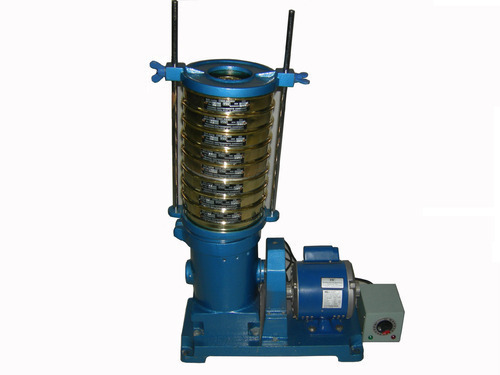
Tell us about your requirement

Price:
Quantity
Select Unit
- 50
- 100
- 200
- 250
- 500
- 1000+
Additional detail
Mobile number
Email

More Products in Construction Equipment Category
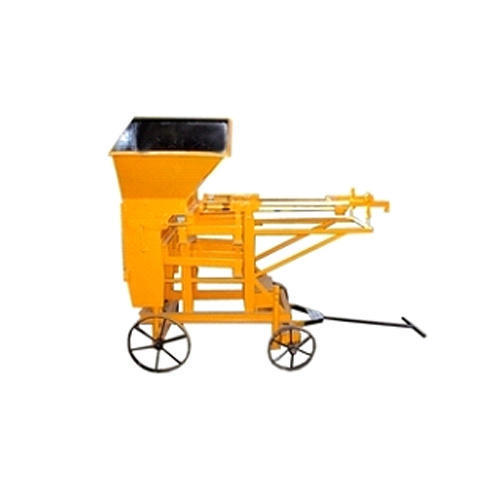
Concrete Batcher
Price 1 INR / Piece
Minimum Order Quantity : 1 Piece
Automatic : Yes
General Use : Construction Material Mixing
Voltage : 415 V
Material : Other, Mild Steel
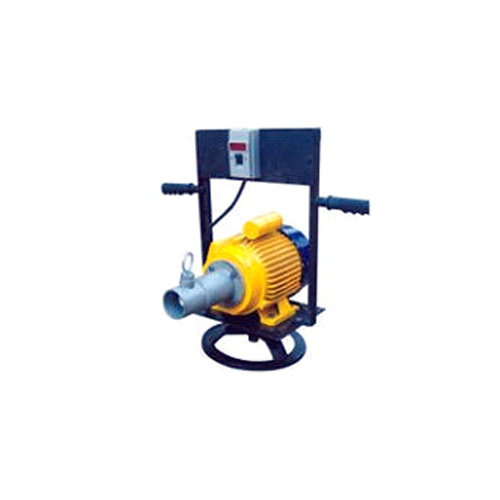
Electric Vibrator
Price 9500 INR / Piece
Minimum Order Quantity : 1 Piece
Automatic : No
General Use : Industrial
Voltage : 210380 V
Material : Other, MS
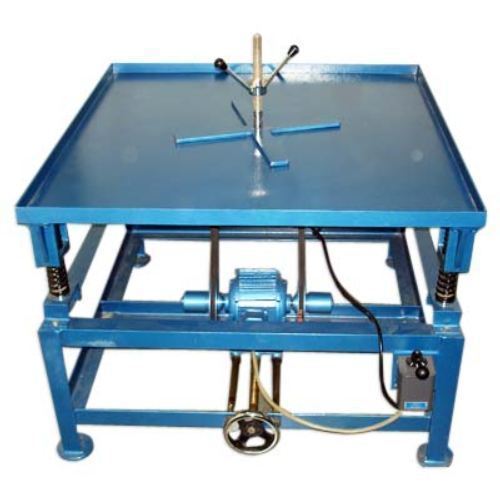
Vibrating Table
Minimum Order Quantity : 1 Piece
Automatic : Yes
General Use : Industrial
Voltage : 210 V
Material : Other, Iron


 Send Inquiry
Our Products
- Compression Testing Machine
- Cube Mould
- Survey Instrument
- Civil Lab Equipment
- Bitumen Asphalt Testing Equipment
- Laboratory Testing Equipment
- Measuring Equipment
- Construction Machinery
- Abrasion Testing Machine
- Test Rig Machine
- Laboratory Planetary Mixer
- Cement & Concrete Lab
- Total Station
- Aluminum Levelling Staves
- Dolly Core Cutter Hammer
- Levelling Instruments
- Strength Of Material Lab
- Scientific Lab Items
- Digital Concrete Test Hammer
- Bitumen Extractor
- Range Pole and Tripods
- Theodolite
- Concrete Mixers
- Soil & Sand Testing Equipments
- Construction Equipment
- Aggregate Testing Equipment
- General Laboratory Testing Equipments
- Needle Vibrator
- B.O.D. Incubators
- Bitumen Testing Equipments
- Temperature Bath
- Magnetic Compass
- RCC Groove Cutter Machine
- Hand Compression Testing Machine
- Heating Oven
- Tray Dryer
- Petrol Kerosene Vibrator
- Vertical Autoclave
- Centrifuge Extractor
- Sand Pouring Cylinder
- Humidity Oven
- Scientific Instruments
- Muffle Furnace
- Survey Measuring Chain
- Length Gauge
- Le Chatelier Mould
- Mild Steel Grouting Pump
- Auto Level
- Hot Air Ovens
- Universal Testing Machine
- Test Apparatus
- Cube Testing Machine
- Beam Mould
- Vibrating Machine
- Bar Bending Machines
- Coating Thickness Gauge
- Automatic Level Instrument


No. 6, Yash Complex, B/h. Navjivan Hotel, Sanand Circle, S-G Highway, Sarkhej,Ahmedabad - 382210, Gujarat, India

Mr Manish Patel
(Proprietor)
Mobile :08045816548
 Send Inquiry
 Send SMS
Developed and Managed by Infocom Network Private Limited.
 English
 Spanish
 French
 German
 Italian
 Chinese (Simplified)
 Japanese
 Korean
 Arabic
 Portuguese