
Call us now :08045816548
 Send Inquiry
 Send Inquiry
Sand Equivalent Test Apparatus
Price 8500 INR/ Piece
MOQ : 1 , , Piece
Sand Equivalent Test Apparatus Specification
- Color
- Multicolor
- Max Height
- Up to 2.5 Feet
- Resolution
- 1 mm (Graduated cylinder)
- Operate Method
- Manual
- Operating Voltage
- 230 V
- Automation Grade
- Manual
- Application
- Determines relative proportion of clay-like material in fine aggregates
- Product Type
- Test Apparatus
- Usage
- Industrial
- Power Supply
- 230 V AC, 50 Hz
- Capacity
- One test at a time
- Machine Weight
- Approx. 7 kg
- Test Width
- Standard - as per ASTM D2419
- Test Stroke
- 203 mm per cycle
- Control Mode
- Manual
- Mixing Mechanical Shaker
- Included
- Graduated Cylinder Material
- Transparent plastic
- Height Range
- Up to 2.5 Feet
- Cylinder Capacity
- 1000 ml
- Carrying Handle
- Provided
- Suitable Standards
- ASTM D2419, IS 2720
- Rods Provided
- Metal rod for agitation
- Stand Material
- Wooden base
- Material Compatibility
- Plastic, Wood
- Equipment Type
- Sand Equivalent Test Apparatus
- Visual Clarity
- Clear markings on cylinder
- Clamp Type
- Spring loaded
Sand Equivalent Test Apparatus Trade Information
- Minimum Order Quantity
- 1 , , Piece
- Supply Ability
- 10 Pieces Per Month
- Delivery Time
- 1-2 Days
- Main Domestic Market
- All India
About Sand Equivalent Test Apparatus
Sand Equivalent Test Apparatus is the widely demanded apparatus used for determining the relative proportion of fine dust or clay like material in soils or fine aggregates either in the laboratory or in the field. Sand Equivalent Test Apparatus is minutely checked on different parameters prior to dispatch to ensure serving our clients with a flawless range.
Product Details:
| Material | Plastic, Wood |
| Height | Up to 2.5 Feet |
Accurate Soil and Aggregate Testing
Ensure quality and reliability in soil and aggregate analysis with the Sand Equivalent Test Apparatus. This machine is essential for measuring the clay content in fine aggregates, a key factor in ensuring compliance with ASTM D2419 and IS 2720 standards. Its transparent graduated cylinder and clear markings offer high visual clarity, which supports consistent, precise testing outcomes.
Robust and User-Friendly Construction
Designed with a sturdy wooden base and a metal agitation rod, the apparatus offers excellent durability and stability during testing. The ergonomic carrying handle and multicolor assembly make it convenient for transportation and easy identification in busy laboratories. Manual operation with a mechanical shaker ensures straightforward, hands-on usage.
Versatile Industrial Application
Perfect for use in industrial labs and on-site soil investigations, this apparatus provides accurate data about the relative proportion of clay-like material in aggregates. Its compatibility with common test standards and manual control make it an accessible and effective tool for quality control in construction and material supply industries.
FAQ's of Sand Equivalent Test Apparatus:
Q: How is the Sand Equivalent Test Apparatus used for soil and aggregate analysis?
A: The apparatus is used by filling the transparent plastic graduated cylinder with a soil or aggregate sample and a standard solution, then mechanically agitating it with the included shaker and metal rod. This process separates clay-like materials, which settle at different levels, making it possible to visually measure and determine the sand equivalent value.Q: What materials are compatible with the Sand Equivalent Test Apparatus?
A: The device is built for use with plastic and wood components and designed to test fine aggregates and soil samples. Its materials are specifically chosen to prevent interference with chemical reactions during the sand equivalent measurement process.Q: When should this apparatus be used in construction projects?
A: It is ideally deployed before construction begins, during the material quality control phase, or whenever it's necessary to verify the cleanliness and suitability of fine aggregates according to ASTM D2419 or IS 2720 standards.Q: Where is this apparatus most commonly used?
A: The Sand Equivalent Test Apparatus is widely employed in industrial laboratories, soil testing centers, and quality control departments of construction sites across India, particularly where adherence to international testing standards is required.Q: What is the process for operating the Sand Equivalent Test Apparatus?
A: Operation involves preparing the sample, filling the graduated cylinder to the marked level, inserting the agitation rod, and securing it with the spring-loaded clamp. The sample is then agitated manually using the mechanical shaker to ensure proper separation, followed by allowing the contents to settle for visual measurement.Q: What benefits does this apparatus offer for aggregate quality control?
A: The apparatus provides accurate, standard-compliant results that help determine the suitability of aggregates for use in construction, ensuring the final material meets regulatory requirements and reducing the risk of failures or poor performance in structures.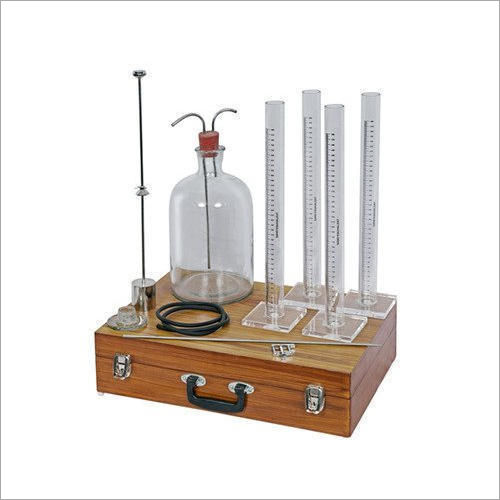
Tell us about your requirement

Price:
Quantity
Select Unit
- 50
- 100
- 200
- 250
- 500
- 1000+
Additional detail
Mobile number
Email

More Products in Test Apparatus Category
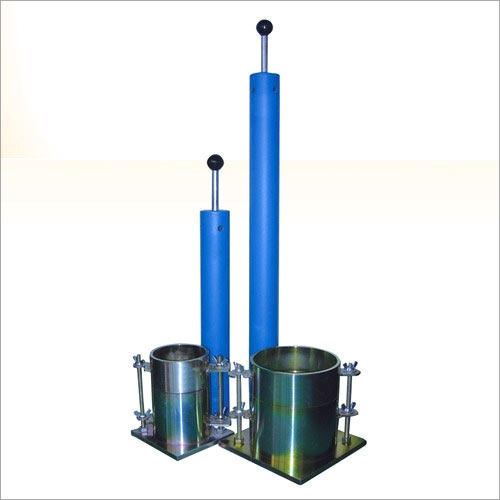
Proctor Compaction Test Apparatus
Price 2400 INR / Piece
Minimum Order Quantity : 1 Piece
Material : Mild Steel
Automation Grade : SemiAutomatic
Power Supply : Manual
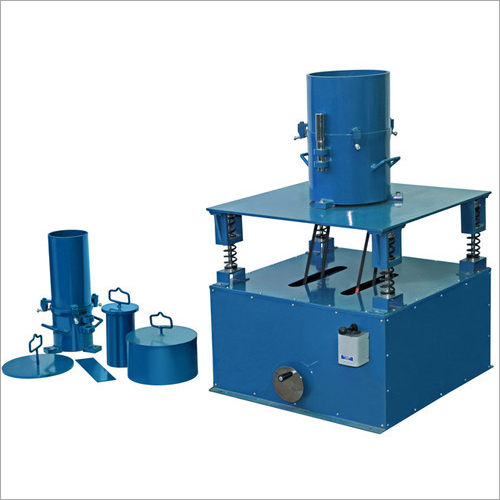
Relative Density Test Apparatus
Price 85000 INR / Piece
Minimum Order Quantity : 1 Piece
Material : Mild Steel
Power Supply : Electric
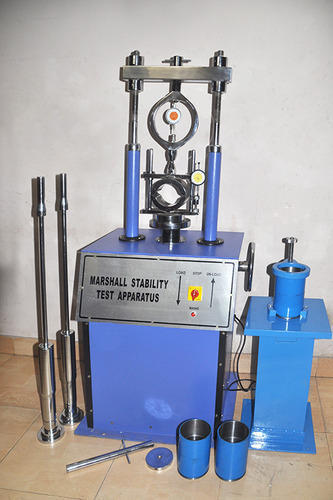
Marshal Stability Test Apparatus
Price 46000 INR / Piece
Minimum Order Quantity : 1 , , Piece
Automation Grade : SemiAutomatic
Power Supply : 230V, single phase
Machine Weight : 150 Kilograms (kg)
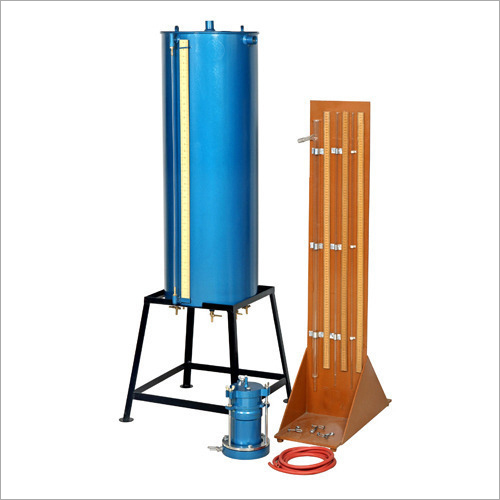
Permeability Test Apparatus Constant And Falling Head
Price 21000 INR / Piece
Minimum Order Quantity : 1 Piece
Material : CI
Automation Grade : Automatic
Machine Weight : 150 Kilograms (kg)


 Send Inquiry
Our Products
- Compression Testing Machine
- Cube Mould
- Survey Instrument
- Civil Lab Equipment
- Bitumen Asphalt Testing Equipment
- Laboratory Testing Equipment
- Measuring Equipment
- Construction Machinery
- Abrasion Testing Machine
- Test Rig Machine
- Laboratory Planetary Mixer
- Cement & Concrete Lab
- Total Station
- Aluminum Levelling Staves
- Dolly Core Cutter Hammer
- Levelling Instruments
- Strength Of Material Lab
- Scientific Lab Items
- Digital Concrete Test Hammer
- Bitumen Extractor
- Range Pole and Tripods
- Theodolite
- Concrete Mixers
- Soil & Sand Testing Equipments
- Construction Equipment
- Aggregate Testing Equipment
- General Laboratory Testing Equipments
- Needle Vibrator
- B.O.D. Incubators
- Bitumen Testing Equipments
- Temperature Bath
- Magnetic Compass
- RCC Groove Cutter Machine
- Hand Compression Testing Machine
- Heating Oven
- Tray Dryer
- Petrol Kerosene Vibrator
- Vertical Autoclave
- Centrifuge Extractor
- Sand Pouring Cylinder
- Humidity Oven
- Scientific Instruments
- Muffle Furnace
- Survey Measuring Chain
- Length Gauge
- Le Chatelier Mould
- Mild Steel Grouting Pump
- Auto Level
- Hot Air Ovens
- Universal Testing Machine
- Test Apparatus
- Cube Testing Machine
- Beam Mould
- Vibrating Machine
- Bar Bending Machines
- Coating Thickness Gauge
- Automatic Level Instrument


No. 6, Yash Complex, B/h. Navjivan Hotel, Sanand Circle, S-G Highway, Sarkhej,Ahmedabad - 382210, Gujarat, India

Mr Manish Patel
(Proprietor)
Mobile :08045816548
 Send Inquiry
 Send SMS
 Call Me Free
Developed and Managed by Infocom Network Private Limited.
 English
 Spanish
 French
 German
 Italian
 Chinese (Simplified)
 Japanese
 Korean
 Arabic
 Portuguese