
Call us now :08045816548
 Send Inquiry
 Send Inquiry
Soil Proctor Mould
Price 1800 INR/ Piece
MOQ : 10 Pieces
Soil Proctor Mould Specification
- Molding Material
- Soil
- Life Span
- Over 5 years
- Mold Base
- Mild Steel
- Cavity
- Single
- Usage
- Industrial
- Shaping Mode
- Compaction
- Material
- Metal
- Size
- Customize
- Tolerance
- High precision
- Mould Weight
- Approx. 5-6 kg
- Mould Life
- Long-lasting
- Height
- Approx. 127 mm
- Base Plate
- Flat steel
- Diameter
- Up to 8 Inch
- Condition
- New
- Color
- Blue
- Shape
- Cylindrical
- Surface Finish
- Smooth
- Usage/Application
- Soil Compaction
- Collar Height
- Standard 60 mm
- Automation Grade
- Manual
- Lid Type
- Removable base
- Assembly
- Detachable collar
- Standard
- IS: 2720 (Part VII)
- Finishing
- Polished
Soil Proctor Mould Trade Information
- Minimum Order Quantity
- 10 Pieces
- Average Load Time
- < 1 Minute
- Supply Ability
- 10 Pieces Per Month
- Delivery Time
- 1-2 Days
- Main Domestic Market
- All India
About Soil Proctor Mould
We have been a well known manufacturer of Soil Proctor Mould in the market. It is used for determining the relationship between the moisture content and density of compacted soil. Made of plated steel, Soil Proctor Mould includes collar, mould body and base plate. We test this on several parameters prior to dispatch from our unit.
Specification
|
Diameter |
Up to 8 Inch |
|
Condition |
New |
|
Finishing |
Polished |
Engineered for Accurate Soil Compaction
This Soil Proctor Mould delivers high-precision results, featuring a robust metal construction and precision machining. The smooth surface finish reduces friction, helping achieve consistent compaction levels required for industrial soil analysis. Its standard size and detachable collar enable versatile use for various soil types, making it an essential tool for evaluating soil properties in construction and research settings.
User-Friendly Design and Long Life
Designed for both efficiency and durability, the mould comes with a removable base and flat steel plate, allowing for easy demoulding and cleaning after each use. The manual operation and high-quality build ensure the device remains operational for over five years, making it a cost-effective investment for laboratories and field engineers. Its customizable sizing options accommodate diverse testing requirements.
FAQ's of Soil Proctor Mould:
Q: How do you use the Soil Proctor Mould for compaction testing?
A: To use the Soil Proctor Mould, assemble it by attaching the detachable collar and removable base. Fill the mould with soil in layers and compact each layer as specified by the IS: 2720 (Part VII) standard. After reaching the required density, remove the collar and base to extract the compacted soil sample for further analysis.Q: What are the main benefits of using this mould in soil compaction analysis?
A: Its smooth polished finish ensures easy soil release and cleaning, while the sturdy mild steel construction guarantees long-lasting precision. The high tolerance levels and customizable sizes provide accurate and reproducible compaction measurements across various soil types, supporting dependable quality control in industrial applications.Q: Where is the Soil Proctor Mould commonly used?
A: This mould is frequently utilized in industrial laboratories, construction sites, and research institutions across India for soil compaction tests. It is an essential tool for civil engineers and soil scientists working on infrastructure and geotechnical projects.Q: What is the standard followed by this Soil Proctor Mould, and why is it important?
A: The mould adheres to IS: 2720 (Part VII), a crucial Indian standard that establishes consistent and reliable procedures for soil compaction testing. This ensures the results are accepted across engineering and construction industries.Q: When should you replace the Soil Proctor Mould?
A: Thanks to its high-quality build and durable mild steel base, the mould has a life span of over five years under regular use. It should be replaced if there is visible damage or if it no longer meets precision requirements.Q: What is the process for cleaning and maintaining the mould after use?
A: After each test, detach the collar and removable base, then clean all components thoroughly to remove residual compacted soil. The polished, smooth surfaces help prevent soil sticking, allowing for easy and efficient maintenance.Q: Can the size of the Soil Proctor Mould be customized to fit specific testing requirements?
A: Yes, the mould can be manufactured in various sizes up to an 8-inch diameter and a standard height of 127 mm, enabling it to accommodate a wide range of soil testing specifications.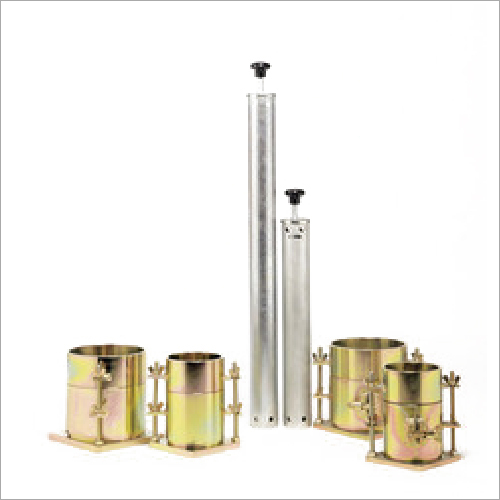
Tell us about your requirement

Price:
Quantity
Select Unit
- 50
- 100
- 200
- 250
- 500
- 1000+
Additional detail
Mobile number
Email

More Products in Cube Mould Category
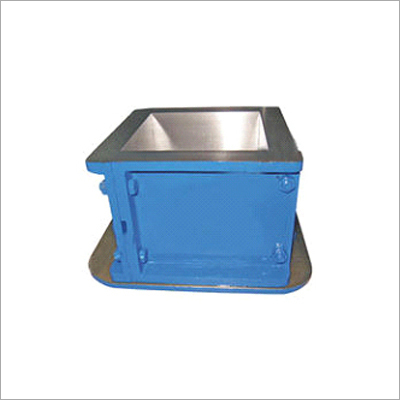
ISI Cube Mould
Price 1600 INR / Piece
Minimum Order Quantity : 1 Piece
Material : Metal
Life Span : Extended use
Molding Material : Concrete
Mould Weight : Up to 50 Kg
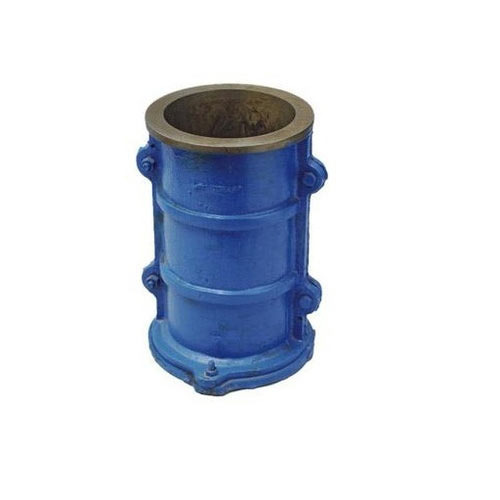
Cylindrical Mould
Price 1 INR / Piece
Minimum Order Quantity : 10 Units
Material : Other, Cast Iron / Mild Steel
Life Span : 58 Years
Molding Material : Concrete
Mould Weight : Approx. 4 kg


 Send Inquiry
Our Products
- Compression Testing Machine
- Cube Mould
- Survey Instrument
- Civil Lab Equipment
- Bitumen Asphalt Testing Equipment
- Laboratory Testing Equipment
- Measuring Equipment
- Construction Machinery
- Abrasion Testing Machine
- Test Rig Machine
- Laboratory Planetary Mixer
- Cement & Concrete Lab
- Total Station
- Aluminum Levelling Staves
- Dolly Core Cutter Hammer
- Levelling Instruments
- Strength Of Material Lab
- Scientific Lab Items
- Digital Concrete Test Hammer
- Bitumen Extractor
- Range Pole and Tripods
- Theodolite
- Concrete Mixers
- Soil & Sand Testing Equipments
- Construction Equipment
- Aggregate Testing Equipment
- General Laboratory Testing Equipments
- Needle Vibrator
- B.O.D. Incubators
- Bitumen Testing Equipments
- Temperature Bath
- Magnetic Compass
- RCC Groove Cutter Machine
- Hand Compression Testing Machine
- Heating Oven
- Tray Dryer
- Petrol Kerosene Vibrator
- Vertical Autoclave
- Centrifuge Extractor
- Sand Pouring Cylinder
- Humidity Oven
- Scientific Instruments
- Muffle Furnace
- Survey Measuring Chain
- Length Gauge
- Le Chatelier Mould
- Mild Steel Grouting Pump
- Auto Level
- Hot Air Ovens
- Universal Testing Machine
- Test Apparatus
- Cube Testing Machine
- Beam Mould
- Vibrating Machine
- Bar Bending Machines
- Coating Thickness Gauge
- Automatic Level Instrument


No. 6, Yash Complex, B/h. Navjivan Hotel, Sanand Circle, S-G Highway, Sarkhej,Ahmedabad - 382210, Gujarat, India

Mr Manish Patel
(Proprietor)
Mobile :08045816548
 Send Inquiry
 Send SMS
Developed and Managed by Infocom Network Private Limited.
 English
 Spanish
 French
 German
 Italian
 Chinese (Simplified)
 Japanese
 Korean
 Arabic
 Portuguese