
Call us now :08045816548
 Send Inquiry
 Send Inquiry
Standard Tar Viscometer
Price 8500 INR/ Piece
MOQ : 1 Piece
Standard Tar Viscometer Specification
- Usage
- temperature measurement
- Capacity
- 1 cup
- Voltage
- 200 - 300 V
- Equipment Materials
- MS
- Type
- Human Body
- Test Type
- Viscosity measurement
- Stirring Mechanism
- Manual
- Cup Diameter
- Approx. 10-12 mm
- Testing Fluid
- Tar and bitumen
- Diameter
- Up to 300 mm
- Payment Mode
- Online and Offline
- Location
- All India
- Support Stand
- Powder coated MS
- Cup Material
- Stainless steel
Standard Tar Viscometer Trade Information
- Minimum Order Quantity
- 1 Piece
- Supply Ability
- 15 Pieces Per Day
- Delivery Time
- 1 Days
About Standard Tar Viscometer
Product Details:
|
Diameter |
Up to 300 mm |
|
Material |
MS |
|
Voltage |
200 - 300 V |
Electrical Heating with Immersion Heating Elements and Dimmer stat for controlling the temperature. Suitable for operation on 230 V, 50Hz, Single Phase , A.C. supply Complete with 10mm cup and valve. Cup, 10mm Ball Valve, 10mm
High-Precision Viscosity Measurement
Engineered to deliver accurate and reproducible results, the Standard Tar Viscometer is ideal for industrial applications involving tar and bitumen. Its stainless steel cup and sturdy MS stand ensure lasting durability, even in demanding conditions. The straightforward manual stirring process makes it convenient for operators to perform viscosity tests with minimal training.
Versatile and Convenient Usage
With usage tailored for temperature and viscosity measurement, the viscometer supports testing procedures in a variety of industries. Its adaptability is enhanced by compatibility with both online and offline payment modes, and its design meets the needs of users all over India, ensuring widespread accessibility.
Built for Industrial Reliability
Constructed from high-grade stainless steel and powder-coated mild steel, the equipment resists corrosion and damage from harsh working environments. The single-cup system simplifies sample management, while the instrument's compatibility with standard voltage supplies ensures ease of installation and operation wherever needed.
FAQ's of Standard Tar Viscometer:
Q: How is the Standard Tar Viscometer used to measure viscosity?
A: To measure viscosity, pour the tar or bitumen sample into the stainless steel cup, manually stir the fluid, and allow it to flow through the cup's 10-12 mm diameter opening. The time required for the sample to pass through is recorded and used to determine viscosity.Q: What materials are used in the construction of the viscometer?
A: The viscometer features a stainless steel cup, a powder-coated mild steel support stand, and other mild steel equipment materials, ensuring durability and resistance to industrial wear.Q: When should I choose manual over automatic stirring mechanisms?
A: Manual stirring is ideal for situations requiring precise control over the mixing process or where power sources may be limited. It is also preferred for routine, straightforward viscosity testing in industrial settings.Q: Where can the Standard Tar Viscometer be used within India?
A: This viscometer is available for use across all regions of India and is well-suited for industrial facilities working with tar and bitumen.Q: What is the process for ordering and payment?
A: You can order the viscometer through authorized traders, and payments can be made conveniently via online or offline modes, based on your preference.Q: What is the benefit of using a stainless steel cup in this viscometer?
A: The stainless steel cup resists corrosion from harsh testing fluids like tar and bitumen, ensuring longevity and more accurate, contamination-free measurements.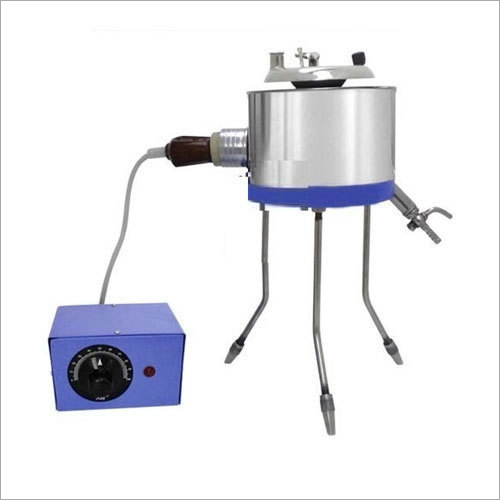
Tell us about your requirement

Price:
Quantity
Select Unit
- 50
- 100
- 200
- 250
- 500
- 1000+
Additional detail
Mobile number
Email

More Products in Scientific Instruments Category
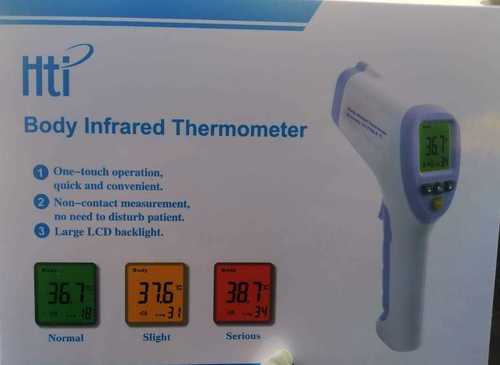
Infrared Thermometer
Price 1 INR / Piece
Minimum Order Quantity : 1 Piece
Product Type : Digital
Equipment Materials : Digital Infrared Thermometer
Usage : temperature measurement
Capacity : 10 Kg/hr


 Send Inquiry
Our Products
- Compression Testing Machine
- Cube Mould
- Survey Instrument
- Civil Lab Equipment
- Bitumen Asphalt Testing Equipment
- Laboratory Testing Equipment
- Measuring Equipment
- Construction Machinery
- Abrasion Testing Machine
- Test Rig Machine
- Laboratory Planetary Mixer
- Cement & Concrete Lab
- Total Station
- Aluminum Levelling Staves
- Dolly Core Cutter Hammer
- Levelling Instruments
- Strength Of Material Lab
- Scientific Lab Items
- Digital Concrete Test Hammer
- Bitumen Extractor
- Range Pole and Tripods
- Theodolite
- Concrete Mixers
- Soil & Sand Testing Equipments
- Construction Equipment
- Aggregate Testing Equipment
- General Laboratory Testing Equipments
- Needle Vibrator
- B.O.D. Incubators
- Bitumen Testing Equipments
- Temperature Bath
- Magnetic Compass
- RCC Groove Cutter Machine
- Hand Compression Testing Machine
- Heating Oven
- Tray Dryer
- Petrol Kerosene Vibrator
- Vertical Autoclave
- Centrifuge Extractor
- Sand Pouring Cylinder
- Humidity Oven
- Scientific Instruments
- Muffle Furnace
- Survey Measuring Chain
- Length Gauge
- Le Chatelier Mould
- Mild Steel Grouting Pump
- Auto Level
- Hot Air Ovens
- Universal Testing Machine
- Test Apparatus
- Cube Testing Machine
- Beam Mould
- Vibrating Machine
- Bar Bending Machines
- Coating Thickness Gauge
- Automatic Level Instrument


No. 6, Yash Complex, B/h. Navjivan Hotel, Sanand Circle, S-G Highway, Sarkhej,Ahmedabad - 382210, Gujarat, India

Mr Manish Patel
(Proprietor)
Mobile :08045816548
 Send Inquiry
 Send SMS
 Call Me Free
Developed and Managed by Infocom Network Private Limited.
 English
 Spanish
 French
 German
 Italian
 Chinese (Simplified)
 Japanese
 Korean
 Arabic
 Portuguese