
Call us now :08045816548
 Send Inquiry
 Send Inquiry
Ice Plant Test Rig Machine
Price 25000 INR/ Piece
MOQ : 1 , , Piece
Ice Plant Test Rig Machine Specification
- Usage
- cube testing
- Application
- Industrial ice formation study
- Capacity
- 2000 Kg/hr
- Equipment Type
- Ice Plant Test Rig Machine
- Power Supply
- 240 V, Electric
- Automation Grade
- Semi-Automatic
- Machine Weight
- 150 Kilograms (kg)
- Tank Capacity
- 20-25 liters
- Compressor Type
- Hermetic sealed
- Condenser
- Air cooled
- Power Source
- Electric
- Usage/Application
- Industrial
- Refrigerant
- R134a compatible
- Condensing Unit
- Mounted bottom
- Temperature Sensors
- Provided
- Safety Controls
- Overload relay
- Cooling Coil
- Copper tubing
- Circuit Breaker
- Present
- Observation Windows
- 2 rectangular
- Evaporator Type
- Plate type
- Input Frequency
- 50 Hz
- Caster Wheels
- Yes
- Panel Display
- Digital
- Test Chamber
- Transparent acrylic
- Insulation Material
- PU Foam
- Material
- MS (Mild Steel)
Ice Plant Test Rig Machine Trade Information
- Minimum Order Quantity
- 1 , , Piece
- Supply Ability
- 15 Pieces Per Day
- Delivery Time
- 1 Days
- Main Domestic Market
- All India
About Ice Plant Test Rig Machine
Ice Plant Test Rig Machine is the one which works on simple compression refrigeration cycle and uses R134-a or R404-A as a refrigerant. It is also useful for understanding working of vapour compression system, its performance and controlling usage as well. Ice Plant Test Rig Machine can be availed from us at feasible rates among our competitors.
Specification
|
Control type |
PLC control |
|
Power Source |
Electric |
|
Voltage (V) |
240 V |
|
Power (W) |
Up to 15 kW |
Advanced Ice Formation Study
Engineered for both industrial and research applications, this Ice Plant Test Rig Machine allows comprehensive and controlled analysis of ice formation processes. The transparent acrylic chambers and observation windows enable direct visual monitoring, greatly enhancing experimentation and learning outcomes in laboratory settings.
Durable Construction and Efficient Performance
With a sturdy MS frame, PU Foam insulation, and copper cooling coil, the design guarantees longevity and high thermal efficiency. The hermetic sealed compressor, air-cooled condenser, and bottom-mounted condensing unit support reliable, round-the-clock operation without overheating, making it ideal for extended usage.
User-Friendly and Safe Operation
The fully digital panel display provides accurate system monitoring, while integrated safety measures-such as overload relays and circuit breakers-protect users and equipment. The equipment's semi-automatic controls, caster wheels, and temperature sensors ensure ease of use and mobility, suitable for demanding laboratory environments.
FAQ's of Ice Plant Test Rig Machine:
Q: How does the Ice Plant Test Rig Machine operate and what is its primary function?
A: The Ice Plant Test Rig Machine operates by circulating refrigerant (R134a compatible) through a copper tubing coil and plate type evaporator, inducing rapid ice formation within the acrylic test chamber. Its primary function is to demonstrate and facilitate the study of industrial ice formation processes for laboratory and research testing.Q: What safety features are incorporated into this machine?
A: The system includes an overload relay and circuit breaker for electrical protection, along with temperature sensors to monitor thermal conditions. These controls ensure both user and equipment safety during prolonged operations.Q: Where can this equipment be installed and used effectively?
A: The machine is suitable for industrial facilities, research institutions, and teaching laboratories. Its mobility, provided by caster wheels, and standard 240V electric supply make it adaptable to a variety of laboratory or industrial environments across India.Q: When is it necessary to use observation windows and what benefits do they offer?
A: Observation windows are essential during testing and research to visually inspect ice formation and operational changes in real-time. This feature aids troubleshooting, enhances experimental accuracy, and supports educational demonstrations.Q: What is the process of ice formation in this test rig?
A: The process begins with the compressor circulating refrigerant through the coil and evaporator in the test chamber. The cold surfaces induce the water inside the chamber to freeze, forming ice cubes which can be observed and measured for testing purposes.Q: How is the machine maintained for optimal performance?
A: Routine maintenance involves checking refrigerant levels (R134a), ensuring the air-cooled condenser remains dust-free, inspecting the seals on the test chamber, and verifying that the digital panel and temperature sensors function correctly. Regular surveillance of the overload relay and circuit breaker is also advised.Q: What are the main benefits of using this semi-automatic test rig for industrial or research applications?
A: The semi-automatic rig provides a controlled, safe, and efficient platform for analyzing ice production. It enhances research accuracy, supports hands-on laboratory training, and offers automated safety features for reliable, user-friendly operation.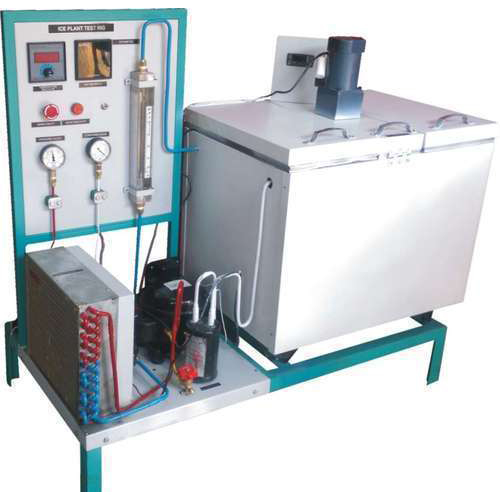
Tell us about your requirement

Price:
Quantity
Select Unit
- 50
- 100
- 200
- 250
- 500
- 1000+
Additional detail
Mobile number
Email

More Products in Test Rig Machine Category
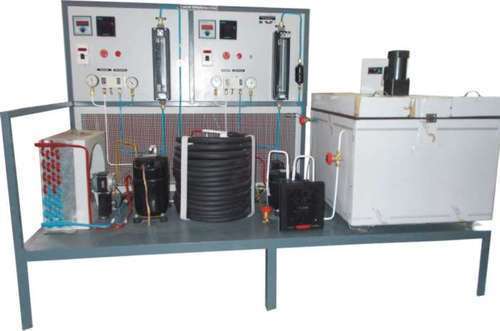
Cascade Refrigeration Test Rig
Price 35000 INR / Piece
Minimum Order Quantity : 1 , , Piece
Machine Weight : 150 Kilograms (kg)
Application : Laboratory, Research, Educational Institution
Capacity : 2000 Kg/hr
Usage : cube testing
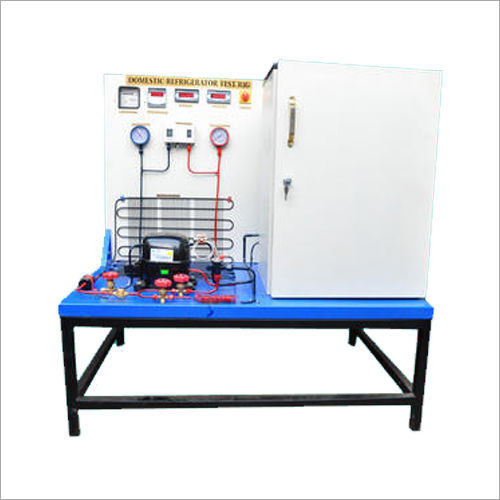
Refrigeration Test Rig Machine
Price 25000- 135000 INR / Piece
Minimum Order Quantity : 1 Piece
Machine Weight : 150 Kilograms (kg)
Application : Industrial
Capacity : 2000 Kg/hr
Usage : cube testing


 Send Inquiry
Our Products
- Compression Testing Machine
- Cube Mould
- Survey Instrument
- Civil Lab Equipment
- Bitumen Asphalt Testing Equipment
- Laboratory Testing Equipment
- Measuring Equipment
- Construction Machinery
- Abrasion Testing Machine
- Test Rig Machine
- Laboratory Planetary Mixer
- Cement & Concrete Lab
- Total Station
- Aluminum Levelling Staves
- Dolly Core Cutter Hammer
- Levelling Instruments
- Strength Of Material Lab
- Scientific Lab Items
- Digital Concrete Test Hammer
- Bitumen Extractor
- Range Pole and Tripods
- Theodolite
- Concrete Mixers
- Soil & Sand Testing Equipments
- Construction Equipment
- Aggregate Testing Equipment
- General Laboratory Testing Equipments
- Needle Vibrator
- B.O.D. Incubators
- Bitumen Testing Equipments
- Temperature Bath
- Magnetic Compass
- RCC Groove Cutter Machine
- Hand Compression Testing Machine
- Heating Oven
- Tray Dryer
- Petrol Kerosene Vibrator
- Vertical Autoclave
- Centrifuge Extractor
- Sand Pouring Cylinder
- Humidity Oven
- Scientific Instruments
- Muffle Furnace
- Survey Measuring Chain
- Length Gauge
- Le Chatelier Mould
- Mild Steel Grouting Pump
- Auto Level
- Hot Air Ovens
- Universal Testing Machine
- Test Apparatus
- Cube Testing Machine
- Beam Mould
- Vibrating Machine
- Bar Bending Machines
- Coating Thickness Gauge
- Automatic Level Instrument


No. 6, Yash Complex, B/h. Navjivan Hotel, Sanand Circle, S-G Highway, Sarkhej,Ahmedabad - 382210, Gujarat, India

Mr Manish Patel
(Proprietor)
Mobile :08045816548
 Send Inquiry
 Send SMS
 Call Me Free
Developed and Managed by Infocom Network Private Limited.
 English
 Spanish
 French
 German
 Italian
 Chinese (Simplified)
 Japanese
 Korean
 Arabic
 Portuguese